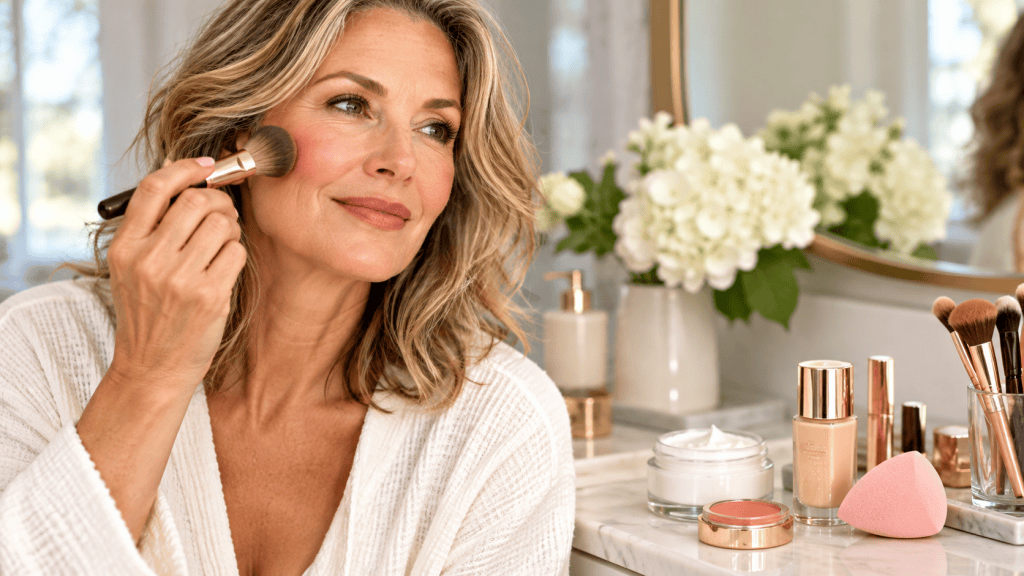
A Simple Routine for a Smoother, More Natural Finish
Makeup can start behaving differently as our skin changes. A foundation that once looked smooth may suddenly settle into fine lines. Powder can make skin look drier. Concealer that used to brighten the under-eye area may seem to emphasize texture instead.
That doesn’t necessarily mean you need more makeup. In many cases, the opposite works better.
For mature, drier skin, a good makeup routine is often about hydration, lighter layers, and choosing formulas that work with the skin rather than trying to cover it completely.
Here is a simple approach that can create a softer, more natural-looking finish without requiring a complicated beauty routine.
Start With Hydrated Skin
The way makeup looks often depends as much on what happens before foundation as the foundation itself.
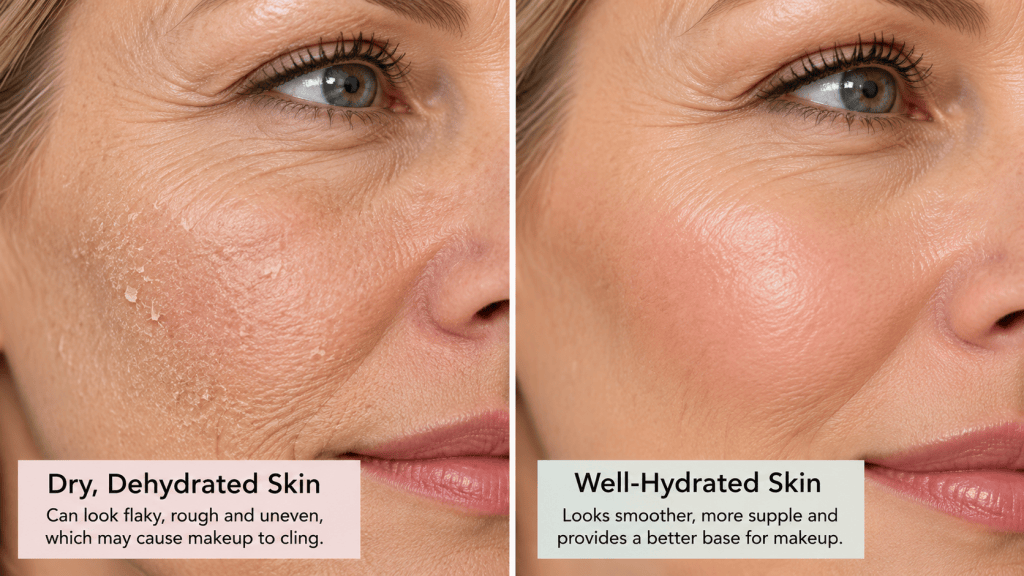
Dry or dehydrated skin can cause makeup to cling to flaky areas and emphasize texture. Before applying makeup, start with a gentle skincare routine and give moisturizer a few minutes to absorb.
A hydrating moisturizer that leaves the skin comfortable rather than greasy can create a much smoother base.
During the day, sunscreen should also be part of the routine. If you use several skincare products in the morning, allowing each layer a little time to settle can help prevent makeup from pilling when foundation is applied.
Decide Whether You Actually Need Primer
Primer can be helpful, but it isn’t automatically necessary.
If your moisturizer and sunscreen already leave your skin smooth and comfortable, you may find that foundation applies beautifully without another layer underneath it.
If you do use primer, look for one designed to add hydration or create a smooth surface rather than an extremely matte formula.
You can also apply primer only where you need it. For example, use around areas with more visible texture rather than covering your entire face.
Choose Foundation With a Natural or Hydrating Finish
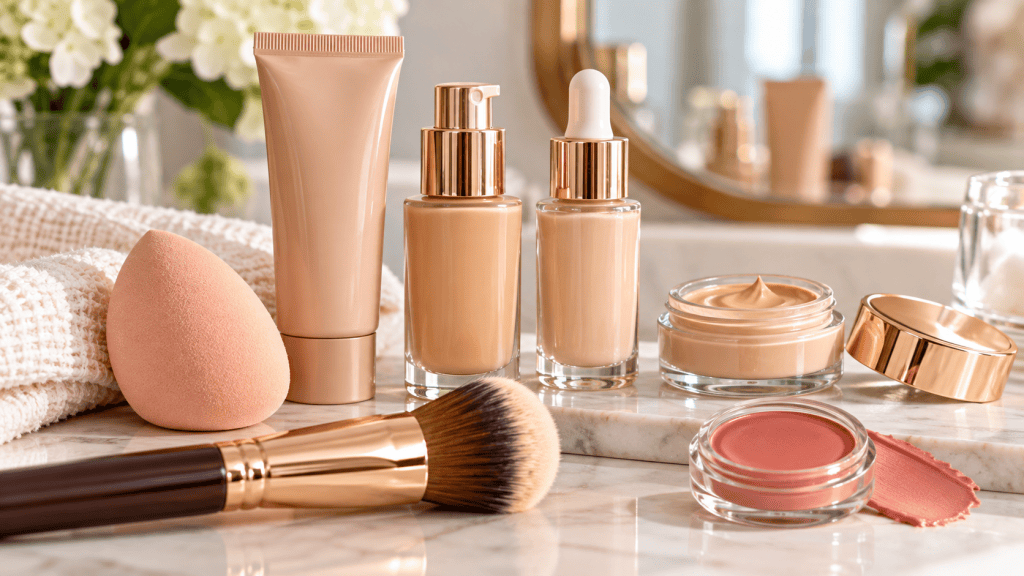
Very matte, full-coverage foundations can sometimes emphasize dryness and fine lines.
For mature, dry skin, lighter formulas with a natural, satin, or luminous finish often look more flattering because some of the skin remains visible.
Tinted moisturizers, skin tints, serum foundations, and medium-coverage hydrating foundations can all work well depending on how much coverage you prefer.
Start with a small amount and add more only where you need it. Building thin layers usually creates a more natural finish than applying one heavy layer across the entire face.
Apply Foundation Strategically
You don’t necessarily need the same amount of foundation everywhere.
Begin around the center of the face, where redness and uneven tone are often more noticeable, and blend outward.
A damp makeup sponge can help press foundation into the skin without leaving a heavy layer. A soft foundation brush can also work beautifully, especially when used with a light hand.
Whichever tool you prefer, the goal is blending rather than covering every bit of natural skin.
Use Less Concealer Than You Think
The under-eye area is one of the easiest places for makeup to settle into fine lines.
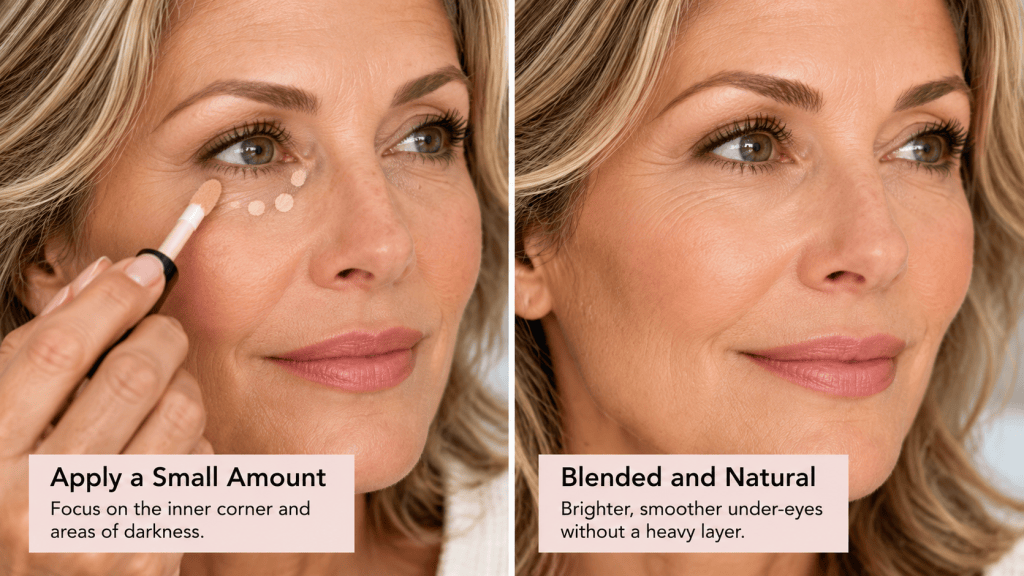
Instead of creating a large triangle of concealer beneath the eye, try applying a small amount only where darkness is most noticeable, often near the inner corner and slightly beneath the eye.
Choose a creamy concealer that provides enough coverage without drying completely matte.
After blending, look at the result before adding more. Often a very small amount provides enough brightness without creating a heavy layer that moves into fine lines later.
Try Cream Blush and Bronzer
Cream products can be especially beautiful on drier skin because they tend to blend into the complexion rather than sitting visibly on top of it.
Cream blush adds color while maintaining a softer finish, and cream bronzer can add warmth without the powdery appearance some traditional formulas create.
Apply a small amount and build gradually. Fingers, a sponge, or a soft brush can all work. The best method is simply the one that gives you the most control.
Be Strategic With Powder
You don’t have to give up powder completely. The trick is using it where it’s actually useful.
A small amount of finely milled powder around the sides of the nose, chin, or other areas where makeup tends to move may be enough.
If the under-eye area is particularly dry, you may prefer very little powder there (or none at all).
Rather than automatically powdering the entire face, look at your skin after applying your makeup and decide which areas actually need setting.
Finish With a Little Moisture
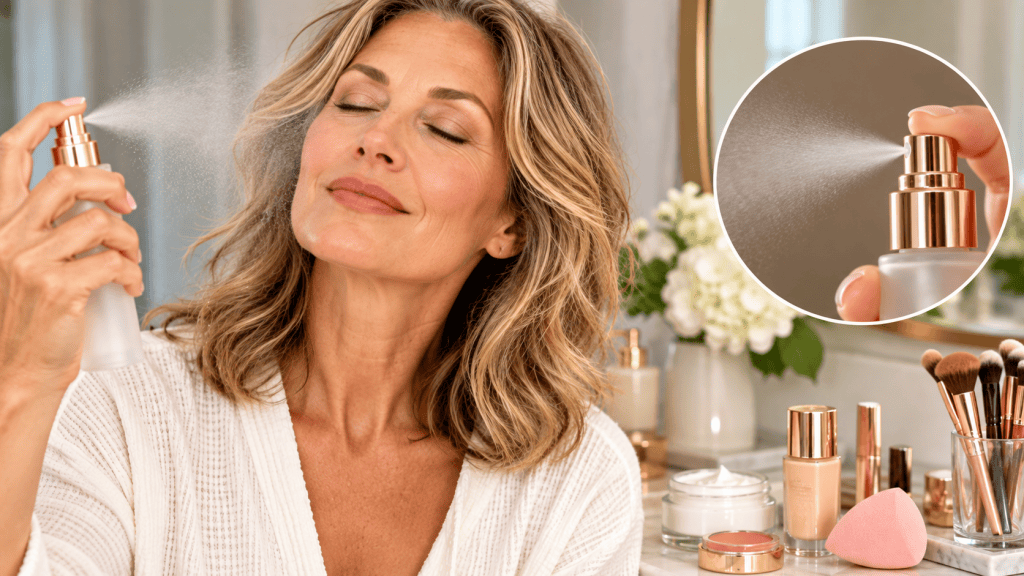
If your makeup looks slightly powdery or flat after application, a hydrating facial mist or setting spray can sometimes help the layers look more like skin again.
You don’t need to saturate your face. A light mist is enough.
Then give everything a few minutes to settle before deciding whether anything needs to be adjusted.
The Goal Isn’t to Hide Mature Skin
Good makeup doesn’t have to erase every line, pore, or sign of age.
Skin has texture at every age, and trying to completely cover that texture can sometimes make makeup more noticeable rather than less.
For drier, mature skin, hydration, lighter layers, creamy formulas, and strategic application can make a much bigger difference than simply adding more coverage.
The best routine is the one that leaves you looking like yourself, just a little more polished and put together.


Leave a comment